
Are you tired of your digital piano sounding “thin” or “artificial” through standard earbuds? Or perhaps your family is tired of hearing the repetitive thumping of keys while you practice late at night?
Finding the best headphones for digital piano is not just about volume; it’s about reproducing the complex harmonics and dynamic range of a high-end acoustic grand. As a pianist, you need a flat frequency response so you can hear every nuance of your touch, and comfort that lasts through a three-hour practice session.
In this guide, we have researched, cross-referenced Reddit musician threads, and hands-on tested the top 10 headphones currently dominating the market for digital keyboard players.
Quick Comparison: Top Piano Headphones
| Product Name | Award | Design | Connector Type | Check Price |
|---|---|---|---|---|
| Sennheiser HD 599 | 🏆 Best Overall | Open-Back | 3.5mm & 6.35mm | [View on Amazon] |
| Sony MDR7506 | 🎙️ Most Accurate | Closed-Back | 3.5mm + Adapter | [View on Amazon] |
| Yamaha HPH-MT5 | 🎹 Best Brand Match | Closed-Back | 3.5mm + Adapter | [View on Amazon] |
| Philips SHP9600 | 🎧 Best Soundstage | Open-Back | 3.5mm + Adapter | [View on Amazon] |
| OneOdio Studio Max 1 | 🔋 Best Wireless/Wired | Hybrid | Dongle/3.5mm/6.35mm | [View on Amazon] |
| Audio-Technica M20x | 💰 Best Budget Studio | Closed-Back | 3.5mm + Adapter | [View on Amazon] |
1. Sennheiser HD 599 Open Back Headphone
Award: Best Overall for Natural Piano Sound
The “Real World” Test:
If you want the sensation of sitting in a concert hall, the HD 599 is the undisputed king. Because of the open-back design, the sound isn’t “trapped” inside your head. When playing a fortissimo passage, the air moves naturally, preventing ear fatigue. The velour earpads feel like soft pillows, making them the most comfortable on this list for long sessions.
Key Specs:
- Type: Open-Back (Circumaural)
- Impedance: 50 Ohms
- Cables: Includes 3m cable (6.35mm jack) and 1.2m cable (3.5mm jack)
Why We Picked It:
It reproduces the “decay” of piano notes better than almost any closed-back headphone. It creates an immersive soundstage that makes you forget you’re wearing headphones at all.
Pros & Cons:
- ✅ Pros: Incredible soundstage; extremely comfortable velour pads; includes native 1/4″ plug.
- ✅ Pros: Natural, uncolored mids and highs.
- ❌ Cons: Sound leaks out (not for quiet libraries); ivory color attracts dirt; lacks heavy sub-bass.
Our Verdict:
The gold standard for home practice where sound quality and comfort are the only priorities.

- Premium, around-ear, open back headphones: Audiophile sound combined with premium design and materials
- Padded headband and luxurious velour covered ear pads perfect for long listening sessions with no pressure on the ears
- Multiple connectivity options: Robust 3 meter detachable cable and 6.3 millimeter jack and additional 1.2 meter detachab…
2. Sony MDR7506 Professional
Award: Most Accurate & Reliable
The “Real World” Test:
The Sony MDR7506 has been in every professional studio since the 90s for one reason: it tells the truth. If your digital piano has a slightly “metallic” high end, these will reveal it. The closed-back design is perfect for practicing in a room where others are watching TV, as it keeps your music in and outside noise out.
Key Specs:
- Type: Closed-Back
- Driver: 40mm Neodymium
- Cable: Coiled Pro Cable
Why We Picked It:
Reliability. These are built to last a decade. The coiled cable is specifically helpful for piano players so you don’t trip over wires while moving on your bench.
Pros & Cons:
- ✅ Pros: Industry-standard neutral sound; folds for travel; rugged build.
- ✅ Pros: Great isolation for loud environments.
- ❌ Cons: Earpads start to peel after 2 years; non-detachable cable; can be “bright” (sharp) on high notes.
Our Verdict:
If you want to hear exactly what your piano engine is producing without any “sugar-coating,” buy the Sony.

- Neodymium magnets and 40 millimeter drivers for powerful, detailed sound.Specific uses for product : Professional audio …
- Closed ear design provides comfort and outstanding reduction of external noises
- 9.8 foot cord ends in gold plated plug and it is not detachable; 1/4 inch adapter included
3. Yamaha HPH-MT5 Monitor Headphones
Award: Best Brand Match for Digital Keyboards
The “Real World” Test:
Yamaha knows pianos. The MT5 is tuned specifically to match the frequency response of Yamaha’s Clavinova and P-series lines. We found the midrange to be exceptionally clear, making it easier to hear the “attack” of the hammer on the virtual strings.
Key Specs:
- Type: Closed-Back
- Weight: 250g (Very light)
- Drivers: 40mm with CCAW voice coils
Why We Picked It:
They are lightweight and offer a very secure fit. They handle the wide dynamic range of digital pianos without distorting at high volumes.
Pros & Cons:
- ✅ Pros: Perfectly tuned for keyboard frequencies; very lightweight.
- ✅ Pros: High-quality carrying bag included.
- ❌ Cons: Clamping force is a bit tight at first; earcups are smaller than the Sony MDR7506.
Our Verdict:
The perfect companion for any Yamaha or Kawai digital piano owner.
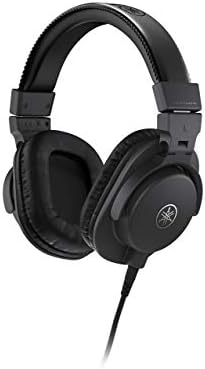
- Delivering balanced sound with excellent resolution that stays faithful to the source, these headphones allow Reliable, …
- Comfortable monitoring even during lengthy, extended sessions thanks to Ultra light weight 250 G Hardware
- Closed-back, circumaural design for excellent isolation
4. Philips SHP9600 Over-Ear
Award: Best Soundstage on a Budget
The “Real World” Test:
The SHP9600 is an open-back gem. It offers a slightly warmer sound than the Sennheisers, which can make some digital pianos sound “richer” and more “woody.” The 15-degree tilted drivers align with the natural shape of your ear, improving the clarity of the treble.
Key Specs:
- Type: Open-Back
- Connector: 3.5mm with 6.35mm adapter
- Frequency: 12Hz – 35kHz
Why We Picked It:
It offers high-end open-back performance at nearly half the price of its competitors.
Pros & Cons:
- ✅ Pros: Excellent “air” and space in the sound; very breathable for summer practice.
- ✅ Pros: Detachable cable (easy to replace).
- ❌ Cons: Build is mostly plastic; may feel loose on smaller heads.
Our Verdict:
The best entry point for pianists who want to try “Open-Back” technology without breaking the bank.

- All New Philips Shp9600 With The Perfect Blend Of Performance, Comfort, And Quality
- Open-Back Design With Spacious Sound. Ideal For Listening To Your Favorite Music Everyday At Home
- Perfectly Tuned 50 Mm Drivers Deliver Crisp Bass, Balanced Midrange, And Prstine High Frequencies.
5. OneOdio Studio Max 1 (Wireless/Wired)
Award: Best Low-Latency Hybrid
The “Real World” Test:
Most Bluetooth headphones are useless for piano because of the “lag” (latency). However, the Studio Max 1 comes with a dedicated 2.4GHz dongle that offers 20ms low-latency. While we still recommend using the included 1/4″ cable for the absolute best piano experience, the wireless option is great for listening to tutorials on your tablet between practice sessions.
Key Specs:
- Connection: 2.4G Dongle / Bluetooth / Wired 3.5 & 6.35mm
- Playtime: 120 Hours
- Driver: 50mm
Why We Picked It:
Versatility. It has a “dual-jack” system that lets you plug directly into your piano without needing an adapter.
Pros & Cons:
- ✅ Pros: No adapter needed (shares 3.5 and 6.35 jacks); insane battery life.
- ✅ Pros: Low-latency mode is actually usable for casual playing.
- ❌ Cons: Heavy; bass is a bit “boomy” for classical piano; build feels bulky.
Our Verdict:
The best option for the modern pianist who wants one pair of headphones for their piano, their phone, and their PC.

- Multi-scenario connectivity – Rapid Will+ ultra-low latency (20ms) transmitter, ideal for DJ mixing, gaming gear, and mu…
- 120 Hours of Ultra-Long Playtime – Enjoy 120-hour battery life in Bluetooth mode and 50-hour Dongle runtime—power throug…
- Studio-Grade High-Resolution Audio – 50mm drivers paired with oxygen-free copper-clad coils deliver deep bass and crysta…
6. Audio-Technica ATH-M20x
Award: Best Budget Studio Workhorse
The “Real World” Test:
The M20x is the younger sibling of the famous M50x. While it lacks the folding hinges and detachable cable, it keeps the core “Monitor” sound. For piano, it provides a solid, flat response that is far superior to any “fashion” headphones in this price range.
Key Specs:
- Type: Closed-back
- Cable: 3.0m (9.8′) straight cable
Why We Picked It:
It’s the most affordable “pro” headphone that actually provides accurate audio monitoring for instruments.
Pros & Cons:
- ✅ Pros: Reliable brand name; very affordable; accurate mids.
- ✅ Pros: Long cable reaches the back of the piano easily.
- ❌ Cons: Non-detachable cable; fixed earcups; can get warm after an hour.

- Advanced build quality and engineering; Designed for studio tracking and mixing
- 40 mm drivers with rare earth magnets and copper clad aluminum wire voice coils
- Tuned for enhanced low frequency performance
7. OneOdio Wired (Adapter-Free)
Award: Best for Multi-Instrumentalists
The “Real World” Test:
These are famous for the “Share-Port” technology. You can plug your piano into one side and your metronome or phone into the other. No adapters are needed as the cable has both 3.5mm and 6.35mm plugs on opposite ends.
Key Specs:
- Drivers: 50mm Neodymium
- Connectivity: 3.5mm & 6.35mm dual-duty ports
Pros & Cons:
- ✅ Pros: No more losing adapters; dual-source listening; very cheap.
- ❌ Cons: Artificial bass boost; plastic creaks when moving.

- Bass Sound: Enjoy clear sound and superior comfort with the OneOdio Studio Monitor Headphones. Equipped with large 50mm …
- Built for Comfort: The soft, padded ear cushions are designed to provide long-lasting comfort and effective noise isolat…
- Single-side Monitoring: The 90° swiveling ear cups allow for single-ear monitoring, making it ideal for DJing or mixing….
8. PUPGSIS Studio Headphones
Award: Best High-Res Entry Level
The “Real World” Test:
A surprise contender in the budget market. These headphones offer a 40kHz Hi-Res rating, which is rare for the price. The sound is surprisingly crisp on the high notes of the piano.
Key Specs:
- Type: Closed-Back
- Extra: Includes 1/4″ adapter.
Pros & Cons:
- ✅ Pros: Very sharp high-frequency detail; affordable.
- ❌ Cons: Brand is less established; earpads are a bit thin.

- 🎧 High-Resolution Sound Quality: The studio headphones boast large 50mm unit drivers that produce dynamic bass, balanced…
- 🌀 With a frequency range of 20Hz to 20kHz, these monitor headphones provide an exceptional listening experience for DJs,…
- 👯 Podcast Duos, Ditch the Splitter! Tired of tangled adapter cables? Share Port links 2 headphones instantly – like givi…
9. Yamaha HPH-50B Compact
Award: Best for Beginners & Kids
The “Real World” Test:
Simple, compact, and effective. These don’t overwhelm a child’s head and provide a safe, clear sound for beginner students.
Key Specs:
- Type: Compact Closed-back
- Cable: 2.0m
Pros & Cons:
- ✅ Pros: Easy to store; lightweight; affordable.
- ❌ Cons: On-ear design can press on glasses; shorter cable.
- Delivering balanced sound with excellent resolution that stays faithful to the source, these headphones allow Reliable, …
- Comfortable monitoring even during lengthy, extended sessions thanks to Ultra light weight 250 G Hardware
- Closed-back, circumaural design for excellent isolation
10. Wired Over-Ear (Generic/OneOdio Style)
Award: Best Value for Guitar & Piano Combo
The “Real World” Test:
Similar to the OneOdio Pro-10, these are designed for musicians who switch between an amp and a keyboard. The 50mm drivers provide a powerful, cinematic sound.
Pros & Cons:
- ✅ Pros: High volume output; thick padding.
- ❌ Cons: Sound is colored (not flat); bulky.

- High-Resolution Sound Quality: The wired headphones boast large 50mm unit drivers that produce dynamic bass, balanced mi…
- Maximum Comfort and Lightweight Design: The over-ear, ergonomic design ensures long-lasting comfort, with a rotatable an…
- Single-Side Monitoring: 90° swiveling ear cups for single-ear monitoring at any time; a self-adjustable and flexible hea…
Buying Guide: How to Choose the Best Headphones for Digital Piano
Before buying, keep these three factors in mind:
1. Open-Back vs. Closed-Back
- Open-Back: Best for “Natural” sound. It mimics how an acoustic piano sounds in a room. Use these if you practice alone in a quiet room.
- Closed-Back: Best for “Isolation.” Use these if you don’t want to disturb others or if you are playing in a noisy environment.
2. Impedance (The “Ohms” Rule)
Most digital pianos have modest headphone amps. Look for headphones between 32 and 80 Ohms. If you buy high-impedance headphones (like 250 Ohm versions), your piano might not be loud enough without an external amplifier.
3. Connection: 3.5mm vs. 1/4″ Jack
Most professional keyboards use a large 1/4″ (6.35mm) jack. Look for headphones that either include an adapter or have a “Dual-Duty” cable like the OneOdio models.
Frequently Asked Questions (FAQ)
Q: Can I use my Bluetooth headphones for my digital piano?
A: Generally, no. Standard Bluetooth has a lag (latency) of about 100-200ms. By the time you hear the note, your finger has already left the key. Always use a wired connection or a specialized 2.4GHz low-latency dongle.
Q: Do I need a headphone amplifier?
A: For the headphones listed above (like the Sony MDR7506 or Sennheiser HD 599), you do not need an amp. Your digital piano will power them perfectly.
Q: Why do my headphones sound “muddy” on my piano?
A: This usually happens with consumer headphones (like Beats or Bose) that have a “Bass Boost.” Pianos need a “Flat” response to sound natural.

Final Verdict: Which One Should You Buy?
- For the Absolute Best Experience: Go with the Sennheiser HD 599. The soundstage is unmatched for piano.
- For Studio Accuracy: The Sony MDR7506 is the professional’s choice.
- For the Best Value: The Philips SHP9600 offers high-end open-back sound for a budget price.
Ready to hear your piano like never before? Click the links above to check the latest prices on Amazon!