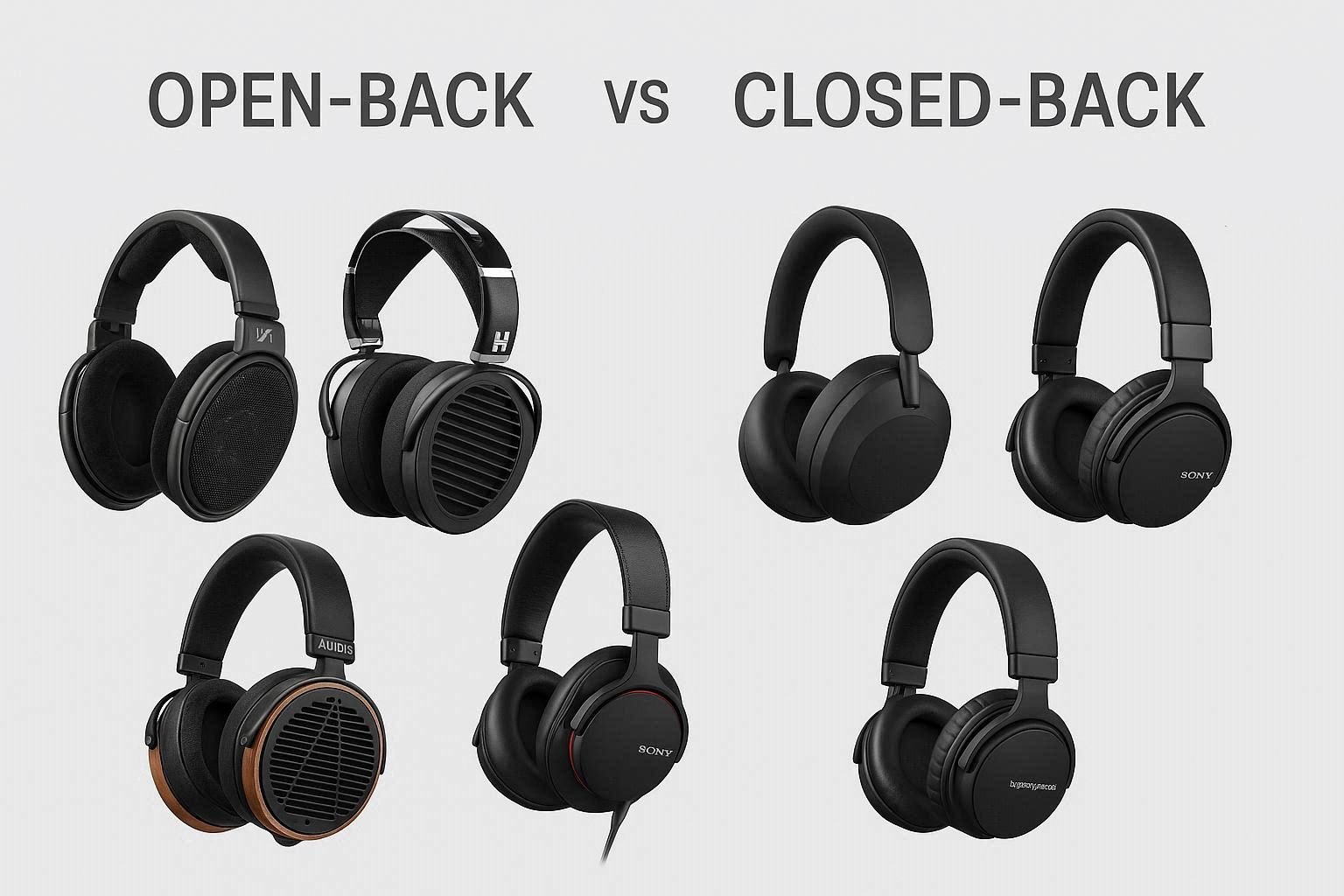
If you’re buying serious headphones, this choice matters more than brand, price, or hype.
The difference between open back and closed back headphones changes how music feels, how long you can listen, and where you can actually use them.
I’ve used both styles for years—at a desk, on flights, in noisy homes, and quiet rooms. Once you understand how each design behaves, the decision becomes clear and confident.
Let’s break it down with real-world context and five proven picks going into 2026.
Table of Contents
The Bottom Line: 2026 Headphone Comparison
| Model | Category | Standout Feature | The Catch | Price Tier |
|---|---|---|---|---|
| Sony WH-1000XM6 | Closed-Back | Class-Leading Noise Canceling | Touch controls can misfire in cold | Premium |
| Sennheiser HD 660S2 | Open-Back | Reference-Level Midrange Detail | Needs an amp, tight clamp at first | High-End |
| Shure SRH1540 | Closed-Back | Studio-Grade Accuracy & Comfort | Bulky dual-side cable | Professional |
| Bose QuietComfort Ultra (Gen 2) | Closed-Back | All-Day Comfort + Strong ANC | App quirks, pricey | Premium |
| Sennheiser HD 599 | Open-Back | Best Entry-Level Open Sound | Leaks sound heavily | Mid-Range |
🎧 Closed-Back Headphones
Best for travel, offices, and deep bass
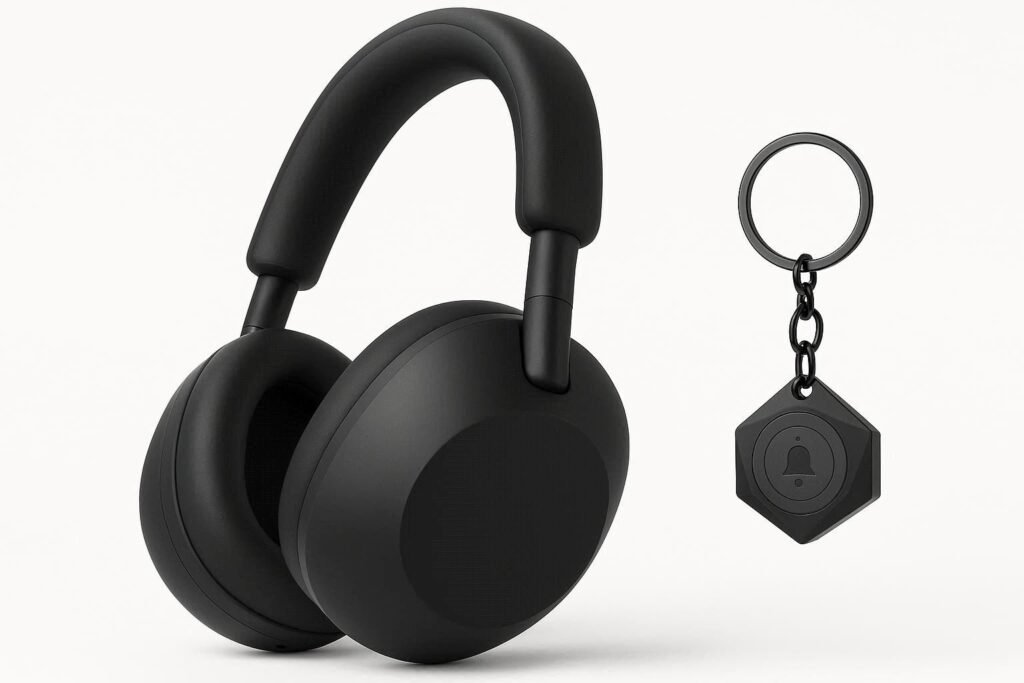
1. Sony WH-1000XM6 (2025)
Best for: Travelers, remote workers, noisy homes
The XM6 is what you buy when silence matters. Put them on in a busy airport and the world drops away. Engines fade. Voices blur. You can finally breathe.
Sony’s ANC is still the benchmark. Bass is full and controlled, not bloated. These are closed-back headphones done right.
What’s actually inside (fact-checked):
- Drivers: Dynamic (Sony does not officially market carbon fiber size details)
- Battery: ~30 hours with ANC on
- Codecs: LDAC, AAC, SBC
- Connection: Bluetooth 5.x (region dependent)
Real-world drawbacks:
Touch controls can act strange in freezing weather, and some long-term users mention hinge noise after heavy use.
Why it earns its spot:
If blocking noise is your top priority, nothing here does it better.

- Bundle Includes: Sony WH-1000XM6 Wireless Noise-Canceling Headphones (Black), Swissdigital Design HEXAGON Finder Key Cha…
- Next-Level Noise Cancellation with QN3 Processor: Experience our most advanced noise cancellation yet—powered by the HD …
- 12 Adaptive Microphones for Precision Sound Control: Twelve strategically placed microphones adapt to your environment a…
2. Bose QuietComfort Ultra (2nd Gen)
Best for: All-day comfort, sensitive heads
Bose doesn’t squeeze your skull. That alone wins a lot of people over. You can wear these for hours without pressure fatigue.
The sound leans warm and smooth. ANC is excellent—just a hair behind Sony. Bose’s “Immersive Audio” widens the sound slightly, though it never truly feels open-back.
What’s actually inside:
- Weight: ~250g
- ANC: Bose CustomTune
- Bluetooth: 5.3+
Real-world drawbacks:
The app isn’t perfect. Wind can cause popping sounds in transparency mode.
Why it earns its spot:
If comfort beats everything else for you, this is the safest buy.

- BREAKTHROUGH SPATIALIZED AUDIO: Super immersive sound spatializes everything, taking the music out of your head and plac…
- NOISE CANCELLING HEADPHONES: Enjoy Bose’s best noise cancellation for headphones with Quiet Mode, turn on Aware Mode to …
- NEW CINEMA MODE: Bring video content to life like never before with Cinema Mode; spatialize and balance background sound…
3. Shure SRH1540
Best for: Studio work, clean bass lovers
No wireless. No ANC. Just sound.
The SRH1540 is for people who care about accuracy. Bass hits hard but stays controlled. Mids are honest. Nothing is exaggerated.
The Alcantara pads stay cool longer than leather, which matters during long sessions.
What’s actually inside:
- Drivers: 40mm neodymium
- Impedance: 46Ω
- Build: Aluminum frame, Alcantara pads
Real-world drawbacks:
The dual-exit cable is bulky and proprietary.
Why it earns its spot:
It proves closed-back headphones can still be audiophile-grade.

- 40 mm neodymium drivers deliver superior acoustic performance for an expansive soundstage with clear, extended highs and…
- Closed-back, circumaural design rests comfortably over the ears and reduces background noise. Ergonomic dual-frame, padd…
- Lightweight construction featuring aircraft-grade aluminum alloy yoke and carbon fiber cap for enhanced durability
🎧 Open-Back Headphones
Best for soundstage, realism, and long desk sessions
4. Sennheiser HD 660S2
Best for: Serious listening at home
This is where the difference between open back and closed back headphones becomes obvious.
Sound doesn’t sit in your head. It floats. Vocals breathe. Instruments separate naturally. You don’t just hear music—you step into it.
What’s actually inside (corrected):
- Design: Fully open-back steel mesh
- Impedance: 300Ω (amp strongly recommended)
- Frequency range: ~8 Hz – 41.5 kHz
- Connection: Wired only
Real-world drawbacks:
Clamp force is real at first. And yes—everyone around you will hear your music.
Why it earns its spot:
For vocals, acoustic music, and detail lovers, this is reference-level sound.

- Premium, around-ear, open back headphones: Audiophile sound combined with premium design and materials
- Padded headband and luxurious velour covered ear pads perfect for long listening sessions with no pressure on the ears
- Multiple connectivity options: Robust 3 meter detachable cable and 6.3 millimeter jack and additional 1.2 meter detachab…
5. Sennheiser HD 599
Best for: Beginners, gamers, casual audiophiles
This is the easiest way to experience open-back sound without spending a fortune.
The soundstage feels wide and natural. In games, footsteps are easy to place. For music, it feels relaxed and airy.
What’s actually inside:
- Impedance: 50Ω (no amp required)
- Pads: Velour
- Weight: ~250g
Real-world drawbacks:
Plastic build feels less premium. Sound leakage is heavy.
Why it earns its spot:
It delivers real open-back benefits with zero setup hassle.

- Audiophile-Grade Open-Back Sound: These Sennheiser over the ear headphones provide a natural, high-fidelity sound with a…
- Precise Highs & Deep Sub-Bass: Sennheiser open back headphones with ultra-light aluminum voice coil and 42mm transducers…
- Powerful Low-End Performance: These wired over ear headphones let you feel every note from piano lows (27.5 Hz) to bass …
Open-Back vs. Closed-Back: What Actually Matters
Soundstage vs. Isolation
Open-back headphones sound wide and natural.
Closed-back headphones keep noise out and bass in.
Sound Leakage
Open-back leaks badly. Great at home. Terrible on buses.
Closed-back keeps your music private.
Heat & Comfort
Closed-back traps heat.
Open-back stays cooler during long sessions.
FAQs
Can I game with open-back headphones?
Yes—and positional audio is usually better. Just don’t expect isolation.
Do open-back headphones always need an amp?
No. HD 599 works fine without one. HD 660S2 absolutely needs one.
Which is better for bass?
Closed-back. Physics favors sealed designs.
Are closed-back headphones safer for hearing?
In noisy places, yes. You listen at lower volumes.
Final Recommendation (Straight Talk)
- Travel, office, noise everywhere:
Buy the Sony WH-1000XM6. Peace and focus, guaranteed. - Home desk, pure sound, music first:
Buy the Sennheiser HD 660S2—and pair it with a small amp.
Once you hear it, you won’t go back.
Choose the design that fits your life—not just your ears.
If you’re still weighing your options, check out our deep-dive into the 5 Best Motorcycle Headphones for 2026 Tested Audio to see how they compare in durability.